
The CHIP Reverse Mortgage Is the One You've Heard Of. Here's What the TV Ad Doesn't Tell You.
If you've been thinking about a reverse mortgage for more than five minutes, you've probably heard of CHIP.
The CHIP Reverse Mortgage from HomeEquity Bank has been running television ads for years. Friendly faces. Reassuring music. The promise of tax-free cash without monthly payments. It's the most recognized reverse mortgage brand in Canada by a considerable margin.
And it's a legitimate product from a legitimate lender. That part is true.
But here's what the TV ad doesn't tell you.
HomeEquity Bank is one of only four lenders in Canada offering reverse mortgages. Between those four lenders there are six distinct products. And the differences between those six products go well beyond the interest rate — they affect how you receive your money, whether you can make payments and how, how much you can actually borrow, and what happens to your rate years down the road when your term comes up for renewal.
Choosing a reverse mortgage based on name recognition alone is a bit like choosing a financial advisor because you liked their billboard. Maybe it works out. But you owe it to yourself to look at the full picture first.
Why So Few Lenders?
Canada's reverse mortgage market is deliberately small. The regulatory requirements are strict, the qualifying criteria are specific, and the product itself is genuinely complex to administer. Most of the big banks have never entered this space — and likely never will.
That's not necessarily a problem. The lenders who do offer reverse mortgages are specialists. They know the product deeply.
But it does mean that walking through the door of one lender — even the most advertised one — without comparing the others means making a significant financial decision based on a fraction of the available information.
A broker gives you the rest of it.
The Six Products at a Glance
Without naming every lender specifically — because a broker will do that job properly based on your situation — here is how the landscape breaks down.
Five of the six products are reverse mortgages in the traditional sense. You qualify based on your age, gender, property type, location, and condition. No monthly payments are required. Interest accrues and the balance is repaid when you eventually sell the home, move out permanently, or pass away.
One product — from a separate lender — is a term mortgage. It operates on the same no-payment principle but has a fixed term of one to five years and is available to homeowners of any age. It is a fundamentally different product and we will come back to it.
Within the five reverse mortgage products, one lender offers two distinct options — a standard reverse mortgage and a lifetime rate product where your interest rate is locked at funding and never changes. Ever. Regardless of what the market does.
That last detail matters enormously over a ten or fifteen year horizon. But we are getting ahead of ourselves.
The Differences That Most People Never Think to Ask About
Here is where it gets genuinely interesting — and where the TV ad falls well short of the full story.
Most Canadians shopping for a reverse mortgage focus almost entirely on one question: how much can I borrow? That is an important question. But it is not the only one. Not even close.
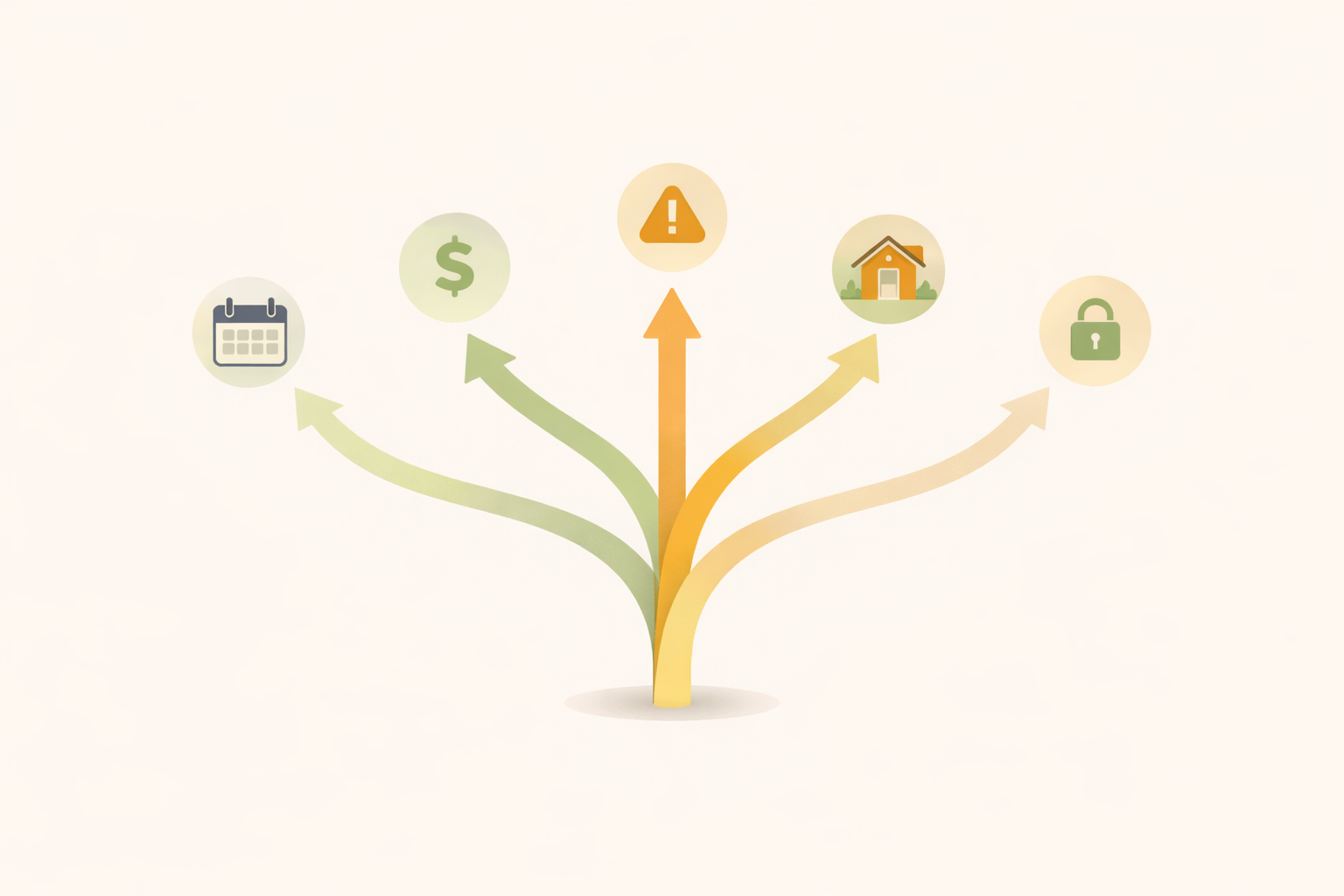
The differences between lenders touch almost every aspect of how the product actually works in your life.
How You Receive Your Money
This one surprises people. You have options — and they differ by lender and by product.
Some lenders offer a lump sum at funding. You receive the full approved amount on day one. Simple and straightforward.
Some lenders allow occasional draws — you access funds as you need them, similar in concept to a line of credit. This can be useful if you don't need everything at once and want to limit the interest accruing on funds you haven't touched yet.
Some products allow scheduled draws — regular amounts at regular intervals, designed to simulate a retirement income stream. For someone supplementing CPP and OAS with home equity, this option can feel remarkably like a paycheque.
The right choice depends entirely on what you need the money for and how you want to manage it. A lump sum to pay off an existing mortgage is a different conversation than monthly draws to cover living expenses. A broker maps the right product to the right purpose.
How Much You Can Borrow — And How That Affects Your Rate
The maximum you can borrow is expressed as a loan-to-value ratio — LTV — and it varies by lender, by product, and by your personal profile.
Age is the primary driver. The older you are, the higher the LTV you can typically access — because the loan period is statistically shorter. Gender also plays a role for the same reason.
But here is the nuance that most people miss — how much you borrow can affect your interest rate. Some lenders offer different rate tiers depending on the loan amount. The CHIP Max product from HomeEquity Bank is a perfect example — it allows a higher LTV than the standard CHIP product, but at a different rate. More access to your equity, different cost structure.
This relationship between loan size and rate exists across multiple products and multiple lenders. It is one of the reasons a broker's guidance is genuinely valuable rather than just convenient — they know where the thresholds are and can help you make an informed decision about the tradeoff.
Whether You Can Make Payments — And How
Every reverse mortgage lender in Canada allows optional payments. You are never required to make one — but you always can.
Why would you want to? Because optional payments slow the growth of your balance. If your cash flow allows for it, even modest occasional payments can make a meaningful difference to what your estate receives down the road.
But here is where it gets specific — and where lenders differ in ways that matter.
Some lenders allow lump sum payments only. Others allow scheduled regular payments. Some have minimum payment thresholds. Some have restrictions on how frequently you can make payments. Prepayment conditions vary. Getting this wrong — or not knowing the rules of your specific lender — can trigger unexpected costs or limit your flexibility when you need it most.
A broker knows the payment conditions for every lender and will factor your preferences into their recommendation.
The one exception is the term mortgage from Lender F. No optional payments are available on that product. The full balance is due at the end of the term — from the sale of the property, a refinance, or other funds. Different product, different rules, different conversation.
Now About That Renewal Rate
We have saved this one for last because it is the detail that tends to land hardest once people understand it.
When you first set up a reverse mortgage, the initial rates across all lenders are broadly competitive. The difference at setup is marginal. Nobody is being gouged on day one.
The difference that matters is what happens when your term ends and your mortgage comes up for renewal.
Here is the breakdown across all five reverse mortgage products:
One lender resets your rate at renewal above the rate they would offer a brand new customer today. You have been a loyal borrower for years. Your reward is a rate that is less competitive than what someone walking through the door for the first time would receive. This is not a minor footnote. Over a fifteen year horizon this difference compounds into real money — potentially tens of thousands of dollars coming out of your estate.
Two products always renew at the lender's best available rate. Fair, transparent, and consistent. No penalty for existing customers.
One product — from a newer market entrant — has renewal rate terms that are not yet fully established. That is not a disqualifier. But it is a known unknown worth monitoring. A broker will stay current on this as it develops.
One product locks your rate for life. Set at funding, never changed. You give up the possibility of rates dropping in your favour — but you eliminate entirely the risk of them rising against you. For someone who values certainty above everything else, this is a genuinely compelling option.
None of this information appears in a TV ad. None of it appears on a lender's website in plain language. It is the kind of detail that lives in the working knowledge of a broker who deals with all four lenders regularly.
What About Property Eligibility?
One more layer worth mentioning — not every lender will approve every property.
Rural properties are a good example. Some lenders are comfortable with rural and semi-rural properties. Others have restrictions or won't consider them at all. If you live outside a major urban centre, lender eligibility is not a given.
Condos are another. Each lender has their own criteria around condo eligibility — building age, percentage of owner-occupants, reserve fund status. The details vary.
Maximum property values, minimum property values, property condition requirements — these all differ by lender. A broker knows the eligibility criteria for all of them and will steer you toward the lenders most likely to approve your specific property before you invest time in an application that goes nowhere.
Putting It All Together
Let's recap what actually differs between Canada's six reverse mortgage and home equity products:
How you receive your money — lump sum, occasional draws, or scheduled income-style payments
How much you can borrow — LTV limits by lender, by product, and by personal profile
How borrowing more affects your rate — the CHIP Max tradeoff is one example of many
Whether and how you can make optional payments — conditions differ significantly
What happens to your rate at renewal — the single most overlooked feature in the entire category
Whether your property qualifies at all — rural, condo, and condition criteria vary by lender
Six variables. Six products. One broker who knows all of them.
What Should You Do Next?
Start with the numbers — then have the conversation.
At canadareversemortgageguide.ca you can get a free personalized comparison showing estimates from all six products side by side. It takes about three minutes. You'll see the floor and ceiling for each lender based on your age, your property value, and your location.
Then when a broker calls to walk you through the results, you'll already know the right questions to ask.
Like — what happens to my rate at renewal?
And — can I set up scheduled monthly draws instead of taking a lump sum?
And — how does borrowing more affect my rate with this particular lender?
Those are the questions the TV ad will never answer. A broker will.
[Get Your Free Comparison at Canada Reverse Mortgage Guide →]
The information in this post is for educational purposes only and does not constitute financial or mortgage advice. Product details, rates, and lender terms change over time. A licensed Canadian mortgage broker can provide current, accurate information tailored to your specific situation.